
- Shopify
- Figma
- Claude
How Tiny Wins Rebuilt Its Shopify Store Around Conversion
Tiny Wins had an existing Shopify store that was in poor technical and visual condition. The project objective was to rebuild the Shopify experience around conversion, clearly communicate the product's value, establish trust with parents, address key objections and questions, and create a foundation that would allow paid acquisition to scale profitably.
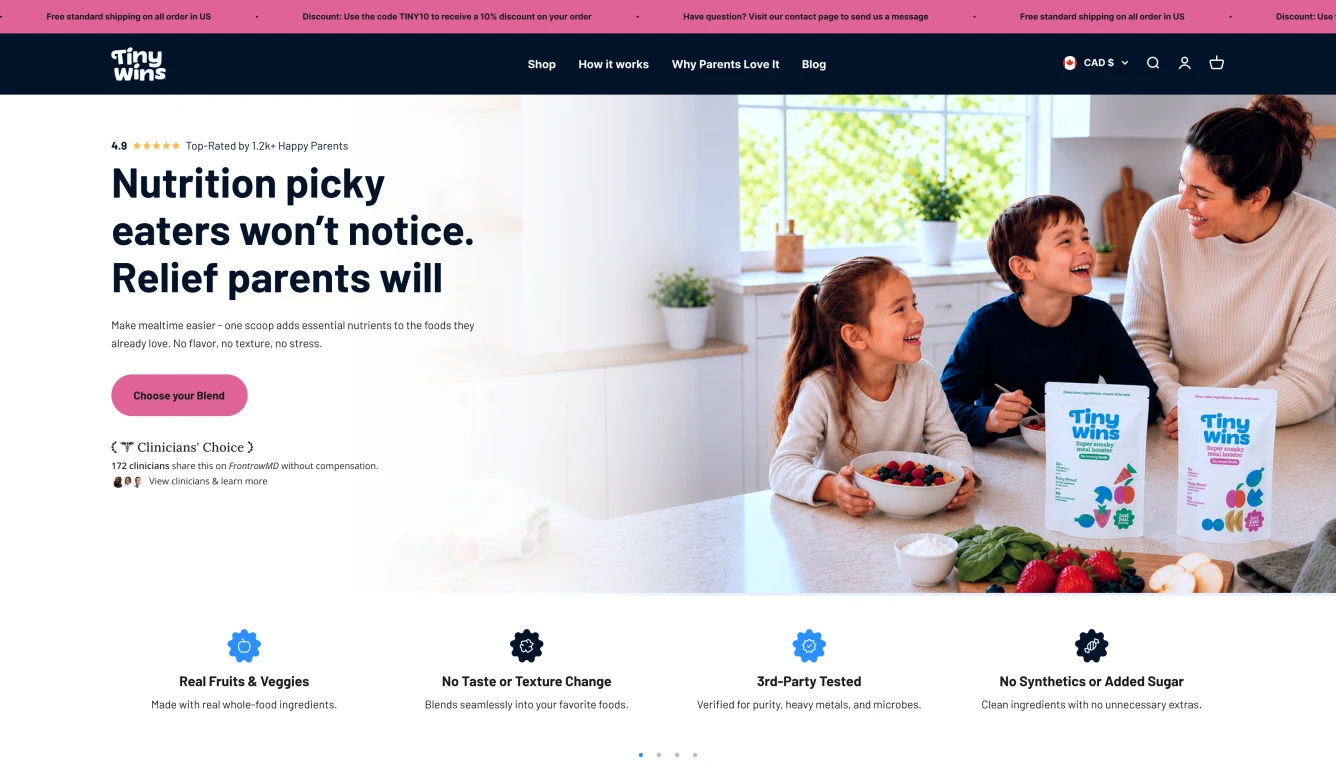
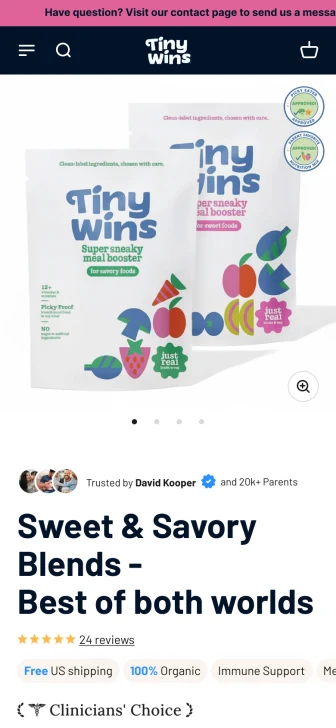
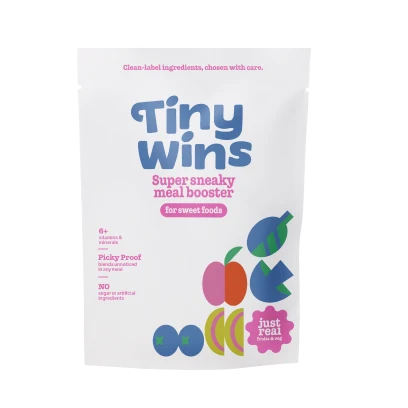
- Conversion-focused Shopify storefront launched
- Customer behavior analyzed with Microsoft Clarity
- Messaging rebuilt around the parent ICP
TinyWins

Tiny Wins had an existing Shopify store that was in poor technical and visual condition. The website had major usability, design, messaging, and trust issues and was failing to effectively communicate the value of the product to parents.
- United States
- tinywinskids.com
- Shopify
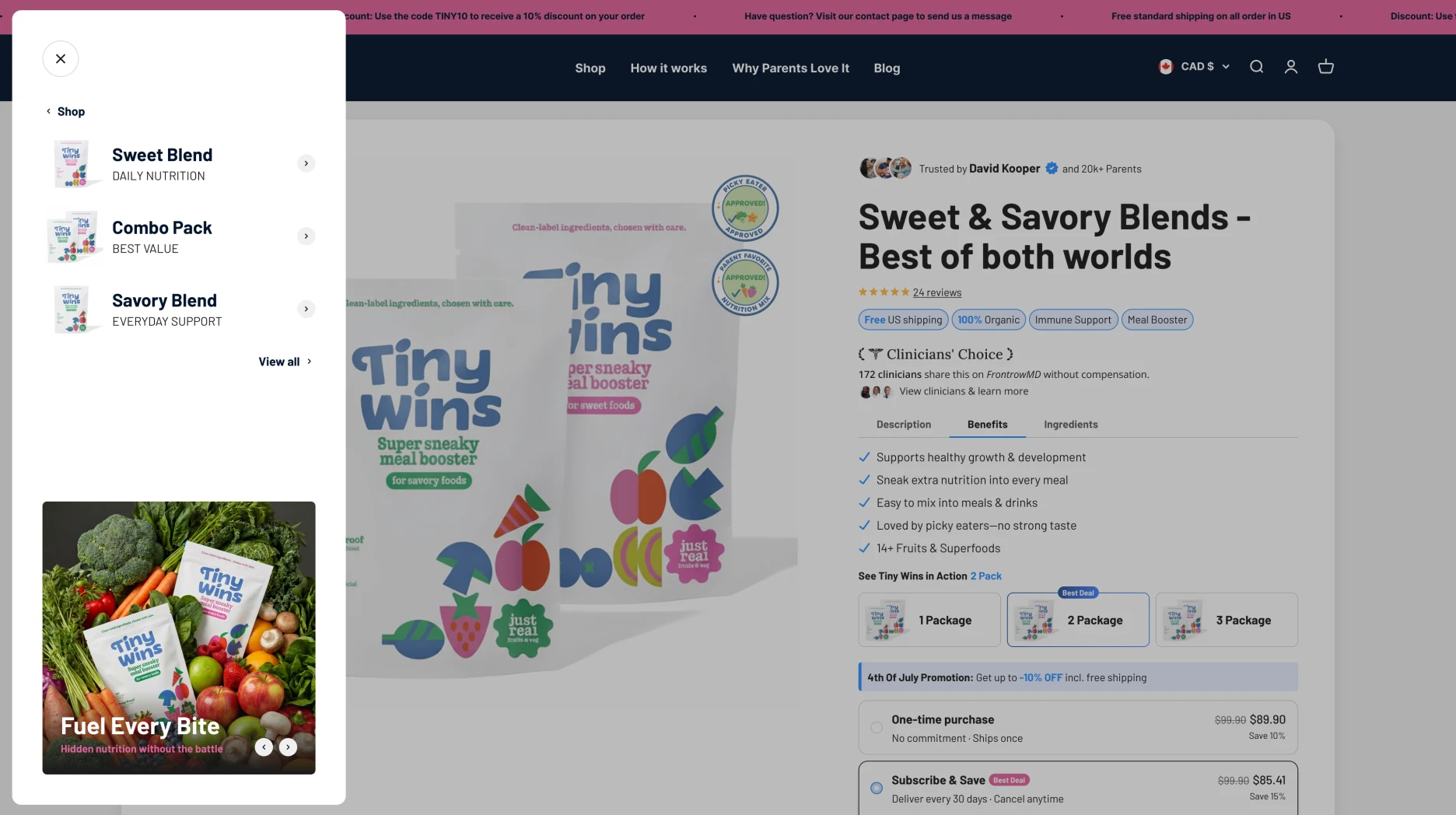
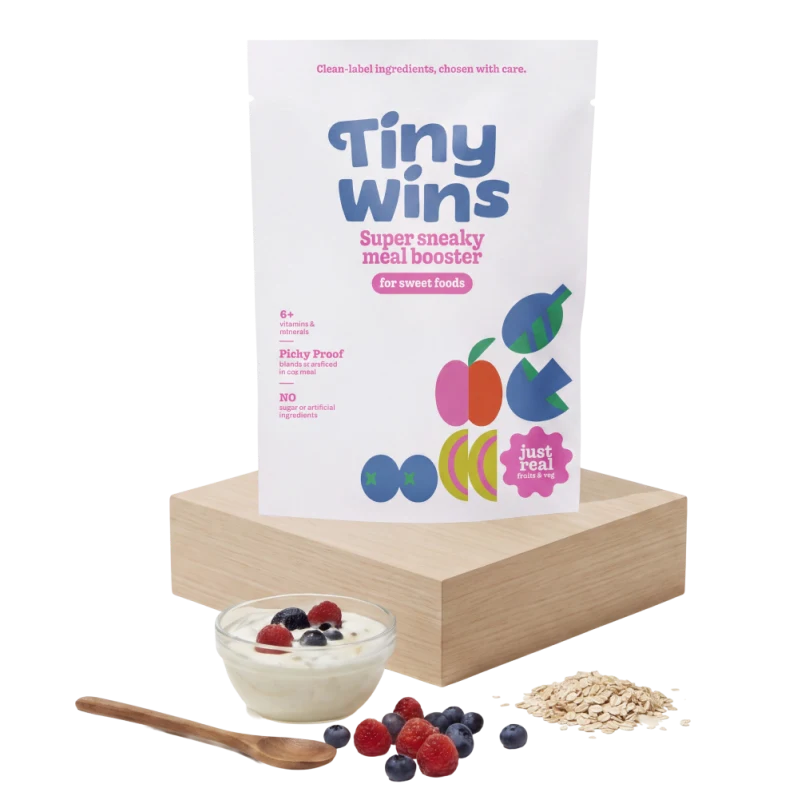
Services Provided:
- Usability audit
- Shopify Project development
- CRO optimisation
The Challenge
The Starting Point
Tiny Wins had an existing Shopify store that was in poor technical and visual condition. The website had major usability, design, messaging, and trust issues and was failing to effectively communicate the value of the product to parents.
What the Client Believed Was Wrong
The business was struggling to generate sufficient sales despite significant investment in paid advertising. The challenge initially appeared to be marketing performance, but the underlying issue was that the website was not converting the traffic being generated.
What Had Already Been Tried
The company had been running paid advertising and driving traffic to the existing Shopify store, but the website was unable to convert that traffic efficiently.
Why It Needed Attention
Tiny Wins had already invested tens of thousands of dollars into advertising with very little return. Continuing to spend on acquisition without fixing the conversion problem was financially unsustainable.
Risk of Doing Nothing
The existing model was unsustainable. Continuing to spend heavily on advertising while sending traffic to a critically underperforming website could eventually make the business financially unviable.
Constraints That Shaped the Solution
The project needed to move extremely quickly. WD Market had to research customer behavior, rethink the UX and messaging, redesign the storefront, and implement the new Shopify experience within a short timeframe.
What Success Needed to Mean
A Shopify store built to convert: one that parents could immediately understand and trust, that clearly explained the product and its benefits, addressed objections and concerns, and provided a strong foundation for scaling paid advertising.
Our Approach
-
What the Evidence Showed
Behavioral and usability analysis revealed significant friction throughout the customer journey. The website lacked clear product communication, persuasive hierarchy, trust-building elements, objection handling, and content tailored specifically to the core ICP: parents.
-
What We Prioritized First
Usability and behavioral analysis came first. Rather than redesigning based on assumptions, WD Market first analyzed how visitors actually interacted with the existing website. Those insights informed the new information architecture, messaging, UX, and visual design.
-
How We Delivered It
WD Market conducted a usability and CRO audit, using Microsoft Clarity to analyze real visitor behavior and interactions. Based on the findings, the team developed a new UX/UI direction in Figma, restructured the messaging and content around the parent ICP, introduced stronger trust and objection-handling elements, changed the Shopify theme, and developed the redesigned storefront.
-
How the Engagement Evolved
The scope evolved from optimizing individual issues into a much more comprehensive Shopify transformation. The evidence showed that incremental changes would not sufficiently address the underlying UX, messaging, trust, and conversion problems, so a new theme and full storefront redesign were implemented.
The People Behind The Work
CRO Specialist, Data Analyst, Project Manager, Shopify Developer, UX/UI Designer, QA Tester.
-

Einārs Melderis
Project Manager
Focus: Project Delivery · Communication · Coordination
-

Tomass Bērziņš
Head of E-Commerce & Co-Owner
Focus: Growth strategy · CRO · Customer Journey
-

Deins Grets
Head of UI/UX & CRO
Focus: UI/UX · Usability · Customer Journeys · CRO
-

Anush Avetisyan
QA Team Lead
Focus: QA · Payments · Integrations · Release Quality
-

Mark Jayvee Aivan Vargas
Developer
Focus: Shopify Development
-

Mārcis Motcats
E-commerce System Engineer
Focus: Full-scale enterprise systems · Automation Workflows · Technology



 25+ Developers, Designers, CRO Specialists & others
Strategic Decisions
-
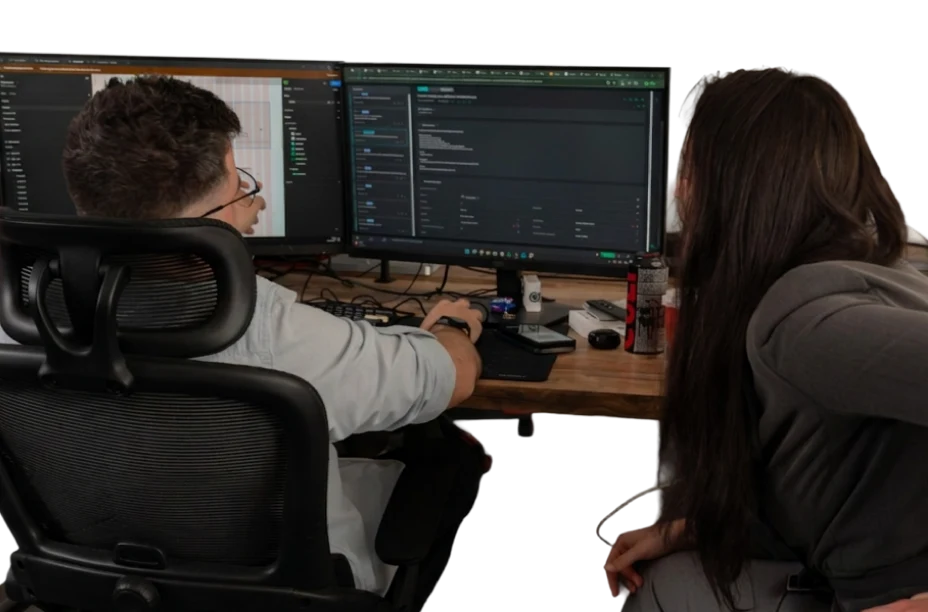
Recommendation
WD Market recommended against continuing to scale paid advertising to the existing website. Increasing traffic would not solve the fundamental conversion problems and would likely result in further inefficient ad spend.
-

What We Deliberately Did Not Recommend
We did not recommend simply increasing advertising budgets or attempting to solve the problem exclusively through new ad creatives or campaigns. The conversion infrastructure needed to be fixed first.
-
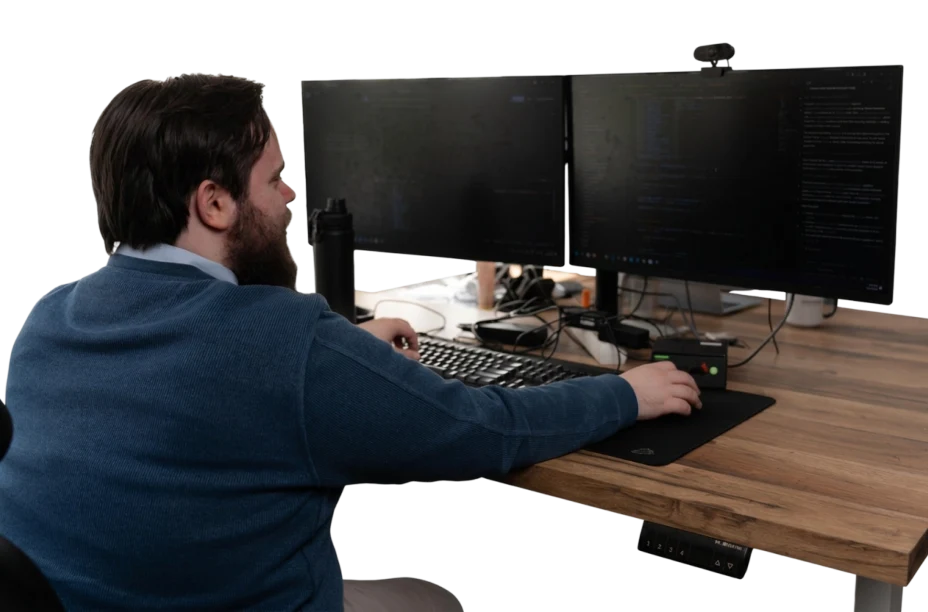
Rebuild / Redesign / Spend Decision
We specifically advised the client not to increase paid media spend before addressing the website’s conversion issues. Instead, the priority became rebuilding the Shopify customer experience around CRO fundamentals.
Results We Delivered
-
Measured Results
Post-launch performance is currently being validated as paid advertising is scaled. The immediate outcome was the successful launch of a fundamentally redesigned and conversion-focused Shopify storefront.
-
Evidence and Metrics
The existing funnel showed critically low conversion performance. Approximately 0.18% reached Add to Cart, around 0.08% reached checkout, and approximately 0.02% converted. These numbers indicated that the website—not simply traffic acquisition—was a major bottleneck.
-
What the Client Gained Beyond the Metric
Tiny Wins gained a scalable eCommerce foundation rather than simply a better-looking website. The new storefront is structured around its ICP, communicates the offer clearly, establishes credibility, answers common questions and objections, and gives the company a stronger foundation for profitable customer acquisition.