- WooCommerce
- Figma
How RIPO Grew Revenue 150% While Consolidating Seven WooCommerce Stores Into One
RIPO's international eCommerce operation had become fragmented across country-specific storefronts. The project objective was to create one scalable international eCommerce platform capable of supporting custom-made products across multiple markets, reduce operational and technical complexity, improve conversion and checkout performance, and establish an infrastructure capable of supporting continued international revenue growth.
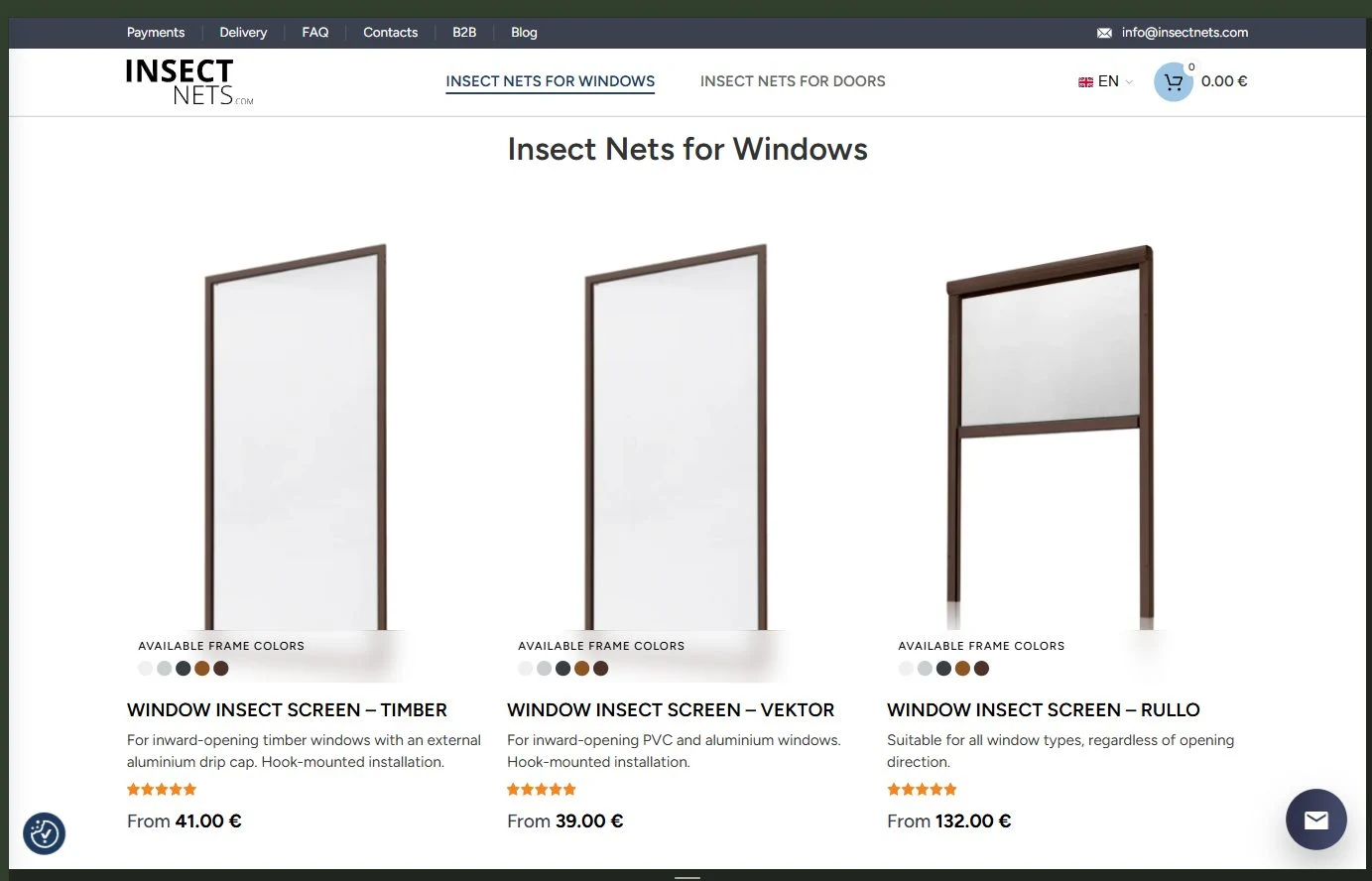
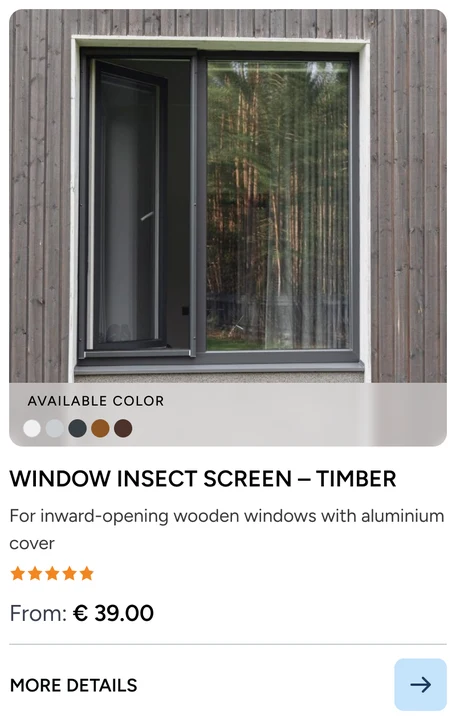

- 150% revenue growth
- 7 country stores consolidated into 1 platform
- Checkout and frontend architecture improved
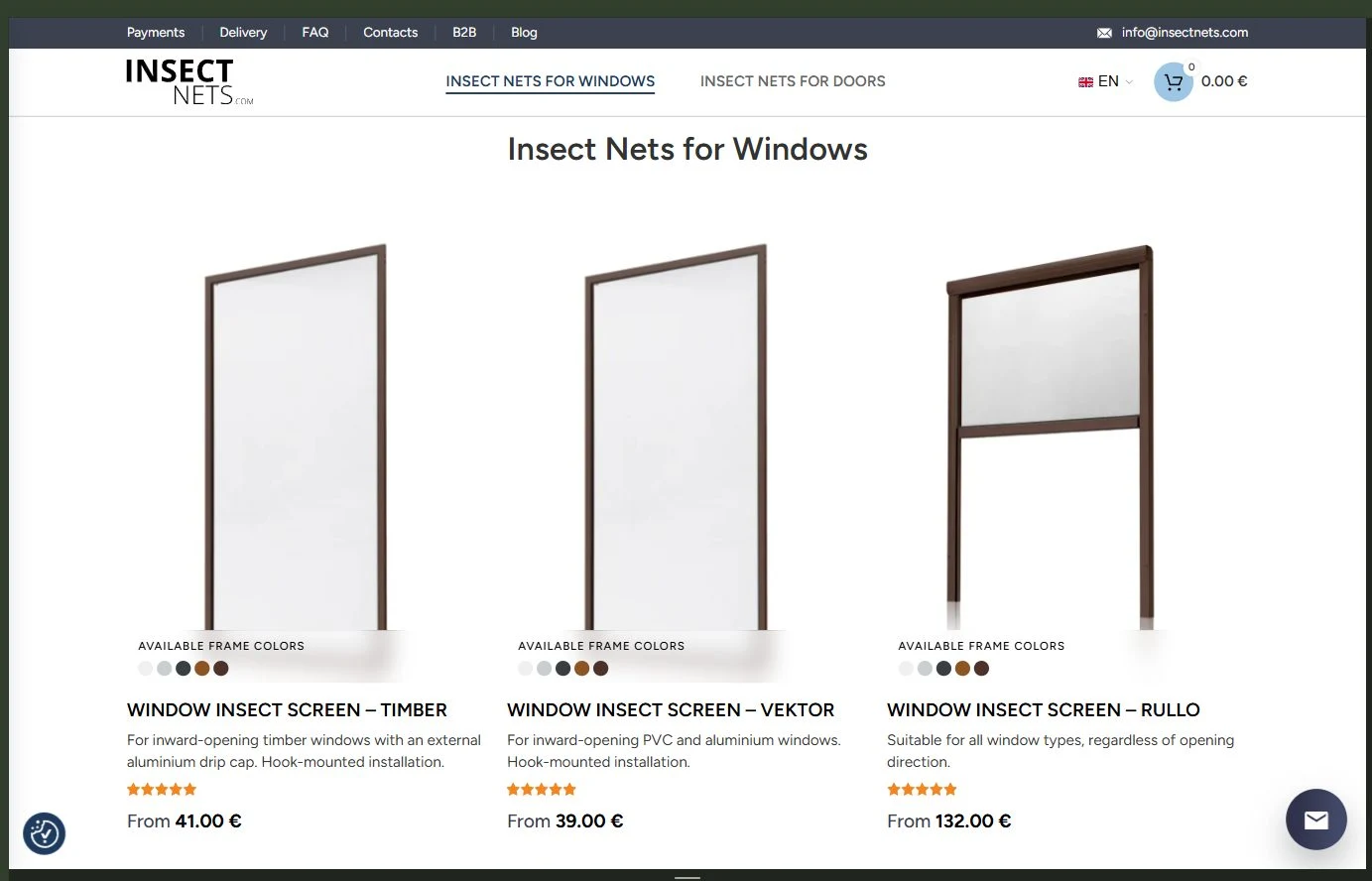
RIPO / InsectNets

RIPO's international eCommerce operation had become fragmented across country-specific storefronts. Maintaining separate stores made improvements slow and repetitive, while the customer journey contained significant friction — particularly around product configuration, checkout and ordering custom-made products. The platform was generating sales, but its infrastructure and UX were limiting its international growth potential.
- International — Baltics, Nordics, Germany, Denmark & other European markets
- insectnets.com
- WooCommerce + Custom RIPO ERP

Services Provided:
- International WooCommerce Consolidation
- CRO
- UX/UI Redesign
- Checkout Optimization
- Technical Re-architecture
The Challenge
The Starting Point
RIPO’s international eCommerce operation had become fragmented across country-specific storefronts. Maintaining separate stores made improvements slow and repetitive, while the customer journey contained significant friction — particularly around product configuration, checkout and ordering custom-made products. The platform was generating sales, but its infrastructure and UX were limiting its international growth potential.
What the Client Believed Was Wrong
Initially, the challenge appeared to be primarily technical: an unsatisfactory previous development project, fragmented international storefronts and ongoing platform issues. Deeper analysis showed that the problem was also commercial — customers were encountering unnecessary friction throughout configuration and checkout, while the multi-store architecture made systematic optimization difficult.
What Had Already Been Tried
RIPO had previously commissioned another development company to build its eCommerce solution. After WD Market took over, seven separate WooCommerce stores were initially created to support different markets. Although functional, this created duplicated maintenance and development work, leading to a strategic decision to consolidate the infrastructure.
Why It Needed Attention
RIPO had already invested in eCommerce but was dissatisfied with its previous development partner and needed a platform capable of supporting international growth. As the business expanded across European markets, maintaining fragmented country stores and a friction-heavy purchasing journey became increasingly difficult to justify.
Risk of Doing Nothing
RIPO would continue maintaining duplicated country-specific infrastructure while losing potential customers through unnecessary configuration and checkout friction. Every new improvement would remain more expensive and slower to deploy internationally, restricting the company’s ability to efficiently scale eCommerce.
Constraints That Shaped the Solution
The solution had to support multiple countries and languages, made-to-measure products, custom configuration, international purchasing journeys, B2C and B2B requirements, and integration with RIPO’s internal systems. Changes also had to be implemented without disrupting an operating international eCommerce business.
What Success Needed to Mean
One stable international platform that could be maintained centrally, a substantially easier purchasing journey for custom products, fewer unnecessary barriers during checkout, and measurable commercial growth from the improved eCommerce experience.
Our Approach
-
What the Evidence Showed
The biggest problems were not isolated visual issues. RIPO’s infrastructure and purchasing journey both created friction. Country-specific stores made improvements unnecessarily repetitive; customers encountered friction close to conversion; the experience lacked consistency across markets; and the existing journey did not fully capitalize on RIPO’s manufacturing expertise, customer trust or B2B opportunity.
-
What We Prioritized First
Creating a unified, maintainable international foundation and removing friction closest to purchase. Consolidating the infrastructure meant improvements could be deployed centrally, while checkout optimization targeted customers already demonstrating high purchase intent.
-
How We Delivered It
WD Market consolidated the separate country websites into one multilingual WooCommerce platform, conducted a CRO-led UX review, redesigned the customer journey and restructured checkout. Improvements included a unified international architecture, CRO-led UI iteration, frictionless checkout optimization, separate B2C/B2B journeys, simplified product discovery and ordering, catalogue restructuring and technical re-architecture for long-term stability.
-
How the Engagement Evolved
The project changed direction several times based on what the team learned. Seven independent stores became one multilingual platform. Elementor was initially used for speed but later replaced with a custom ACF architecture after technical problems emerged. CRO findings also shifted attention from purely technical improvements toward customer journey, checkout and conversion performance.
The People Behind The Work
Executive/Account Leadership, Project Management, CRO Specialist, UX/UI Designer, WooCommerce Developers, ERP/Integration Development, QA.
-

Einārs Melderis
Project Manager
Focus: Project Delivery · Communication · Coordination
-

Tomass Bērziņš
Head of E-Commerce & Co-Owner
Focus: Growth strategy · CRO · Customer Journey
-

Lauris Priede
Chief Technology Officer
Focus: Architecture · Integrations · Performance
-

Deins Grets
Head of UI/UX & CRO
Focus: UI/UX · Usability · Customer Journeys · CRO
-

Anush Avetisyan
QA Team Lead
Focus: QA · Payments · Integrations · Release Quality
-

Rainers Leitarts
Full-stack Developer
Focus: Development · Integrations · Checkout
-

Mārcis Motcats
E-commerce System Engineer
Focus: Full-scale enterprise systems · Automation Workflows · Technology



 25+ Developers, Designers, CRO Specialists & others
Strategic Decisions
-
Recommendation
The technical direction changed as evidence accumulated. Maintaining separate country stores was replaced by a unified multilingual architecture. Later, WD Market also stopped trying to preserve the Elementor implementation when it became clear that its performance, integration and maintenance problems were undermining the platform.
-

What We Deliberately Did Not Recommend
We did not continue scaling through additional independent country stores, and we did not indefinitely patch an unstable frontend architecture. Both approaches would have increased long-term maintenance cost and complexity.
-
Rebuild / Redesign / Spend Decision
We recommended rebuilding only where the evidence justified it. The business did not need another arbitrary full-platform replacement, but the frontend architecture ultimately did require rebuilding after Elementor created recurring stability, performance and integration problems.
Results We Delivered
-
Measured Results
150% revenue growth. Seven fragmented country storefronts were consolidated into one unified international platform, while checkout friction was reduced and the underlying frontend was rebuilt for greater stability, performance and maintainability.
-
Evidence and Metrics
The CRO/UX review identified several critical issues: fragmented multi-country infrastructure, checkout friction close to the final purchase step, no unified brand experience, an underutilized social-proof layer and untapped B2B potential. Following the changes, RIPO achieved +150% revenue growth while moving from fragmented country stores to a unified international platform.
-
What the Client Gained Beyond the Metric
RIPO gained a centralized international eCommerce infrastructure instead of a collection of country-specific websites. The business can now implement improvements across markets more efficiently, maintain a more consistent customer experience and build future CRO, B2B and international expansion initiatives on a considerably stronger technical foundation.
- +150% Revenue growth Following the changes.
- 7 → 1 Country stores Consolidated into one international platform.
- Rebuilt Frontend For stability, performance and maintainability.