- Shopify
- Figma
How Stories Flooring Increased Completed Purchases by 17.5% Through a CRO Audit
Stories Flooring was already a successful and profitable eCommerce business with an established marketing team, IT team, and Head of eCommerce. The project objective was to increase conversion performance from existing traffic; identify and remove customer journey friction; improve product discovery; increase progression from product pages to cart and checkout; improve checkout completion; and generate more revenue without relying on additional advertising spend.
- Add-to-cart +17%
- Reached checkout +16%
- Completed purchases +17.5%
Stories Flooring

Stories Flooring was already a successful and profitable eCommerce business with an established marketing team, IT team, and Head of eCommerce. However, there was no dedicated owner responsible for continuously researching and optimizing the on-site customer experience and conversion rate. The business wanted to understand whether hidden usability and behavioral barriers were preventing further growth.
- United Kingdom — B2C/B2B
- storiesflooring.co.uk
- Shopify Plus
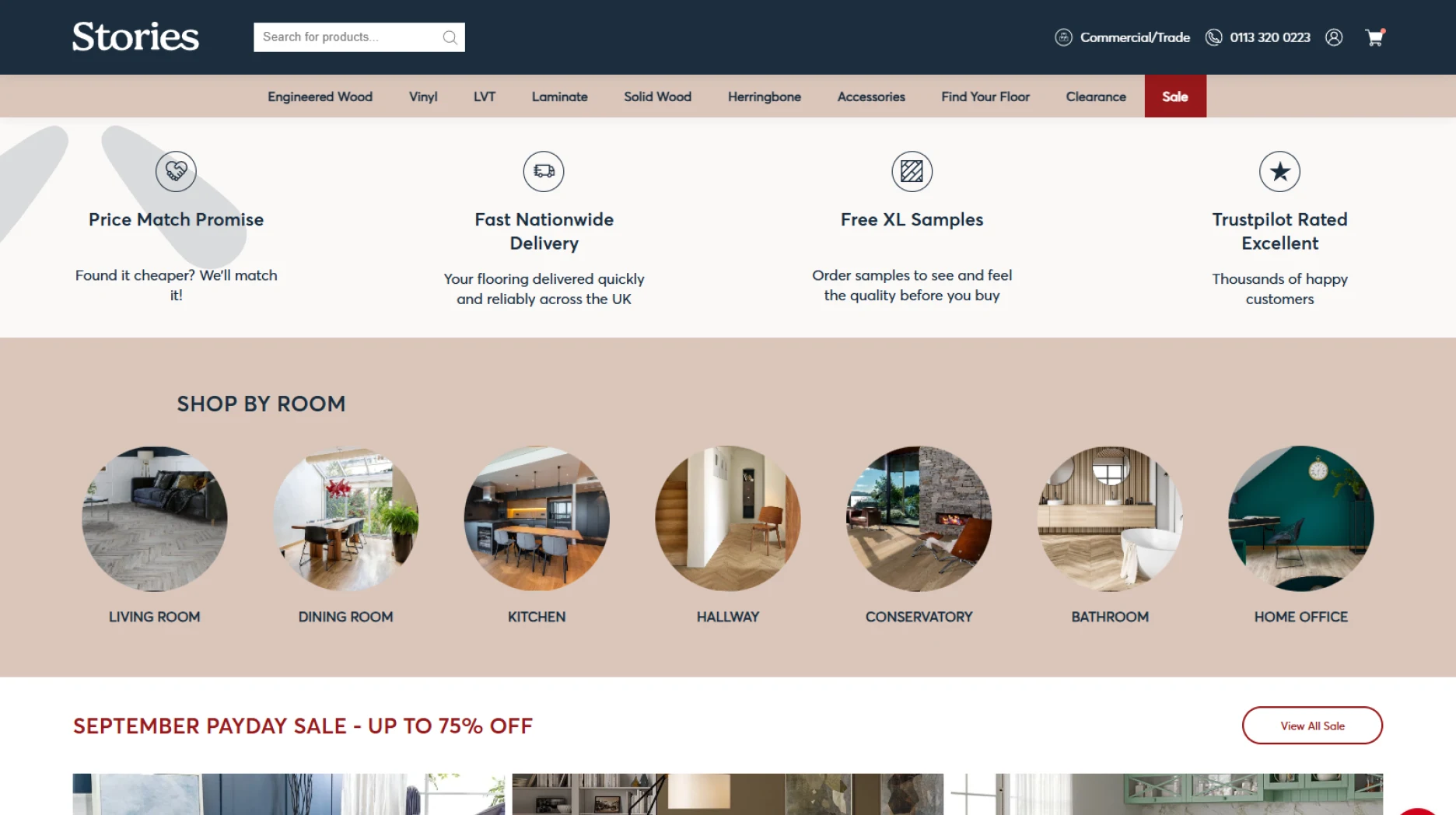
Services Provided:
- eCommerce Usability Audit
- CRO
- UX Improvements
- A/B Testing
- Conversion Optimization
The Challenge
The Starting Point
Stories Flooring was already a successful and profitable eCommerce business with an established marketing team, IT team, and Head of eCommerce. However, there was no dedicated owner responsible for continuously researching and optimizing the on-site customer experience and conversion rate. The business wanted to understand whether hidden usability and behavioral barriers were preventing further growth.
What the Client Believed Was Wrong
The client did not believe the website had one major problem. Instead, they wanted to understand whether they were missing opportunities to improve conversion rate despite already having a mature eCommerce operation.
What Had Already Been Tried
The company already had internal marketing, eCommerce, and IT capabilities supporting the store. However, CRO did not have a clear dedicated owner responsible for combining analytics, customer behaviour, qualitative research, and experimentation into a continuous optimization process.
Why It Needed Attention
Stories Flooring already had traffic, an established eCommerce operation, and internal marketing and technical resources. The next growth opportunity was improving how effectively existing traffic converted rather than simply attracting more visitors.
Risk of Doing Nothing
Stories Flooring could continue operating successfully, but conversion opportunities would remain unidentified. Marketing would continue generating traffic and IT would continue handling development while no dedicated function systematically investigated why customers hesitated or abandoned purchases.
Constraints That Shaped the Solution
Flooring is a highly visual and considered purchase. Customers need confidence around appearance, room suitability, quantity, quality, installation, and the overall purchasing decision. The optimization work therefore needed to reduce uncertainty without introducing unnecessary complexity into an already functioning eCommerce operation.
What Success Needed to Mean
Measurable improvements throughout the eCommerce funnel — more customers discovering relevant products, adding products to cart, reaching checkout, completing purchases, and ultimately generating more revenue from existing traffic.
Our Approach
-
What the Evidence Showed
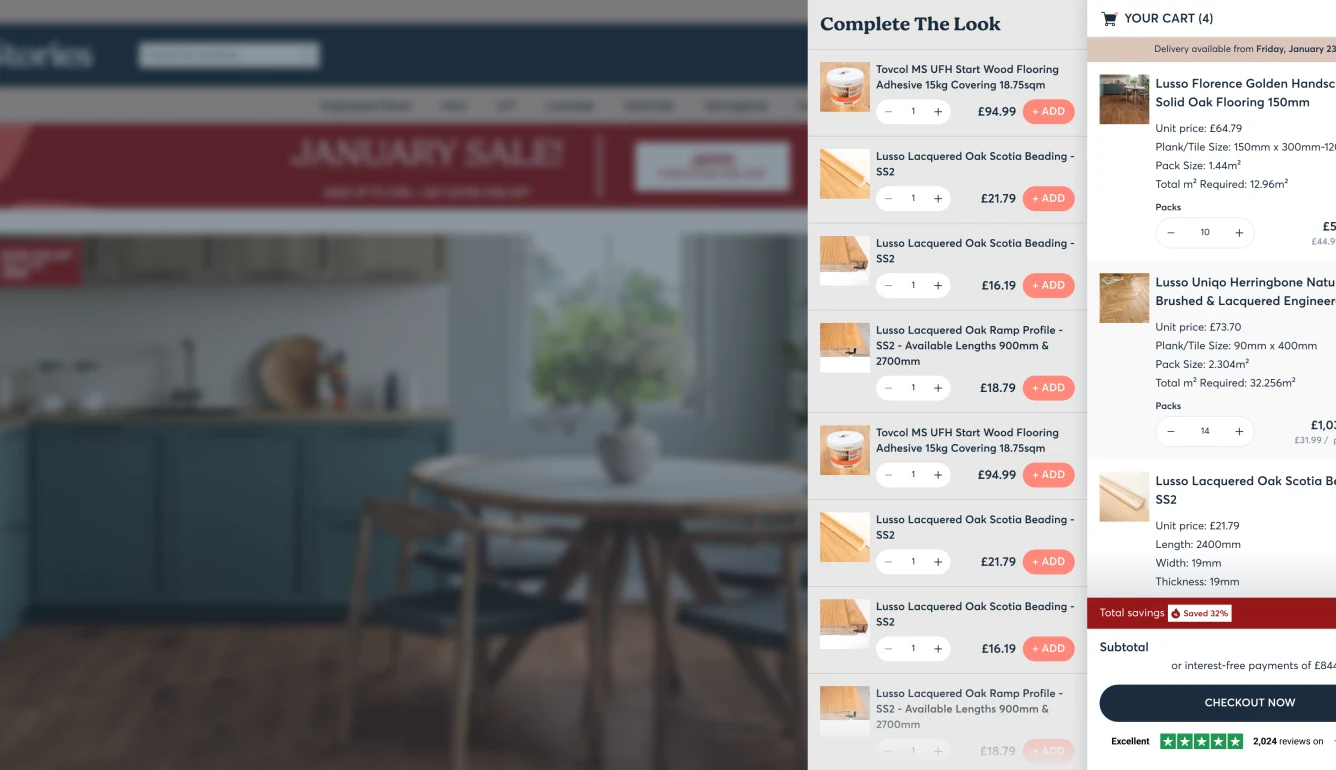
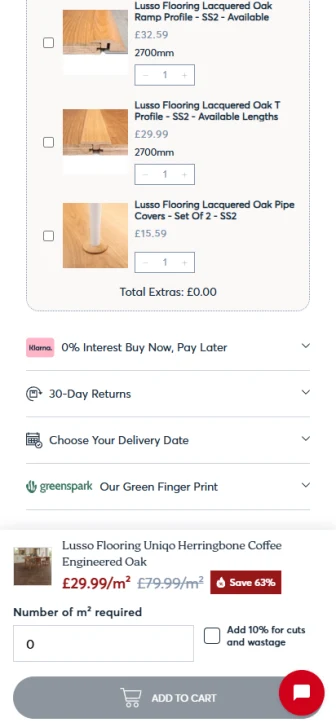
The research identified friction across several parts of the journey. Mobile catalogue filters disappeared while scrolling, making product discovery unnecessarily difficult. Product pages attracted significant interaction with imagery while important purchasing information was less visible. Checkout lacked strong reassurance and savings communication. The mobile side cart created unnecessary cognitive load. Customer research also showed that shoppers wanted greater confidence about how flooring would look in their homes, how much to order, and whether products were suitable for specific rooms.
-
What We Prioritized First
Understanding why customers were not purchasing. Quantitative data showed where customers were dropping out, while qualitative research and session behaviour helped explain why. This allowed WD Market to prioritize improvements based on evidence rather than assumptions. The roadmap then focused on the mobile side cart, add-to-cart visibility and catalogue filtering, cookie consent, social proof, savings visualization, and performance validation.
-
How We Delivered It
WD Market started with a comprehensive usability and CRO audit combining GA4, Microsoft Clarity, Hotjar, session recordings, funnel analysis, customer behaviour, and business context. Instead of making broad changes based on eCommerce best practices, the team developed hypotheses from observed customer behaviour, prioritized the highest-impact opportunities, implemented improvements, and validated them through performance analysis and A/B testing.
-
How the Engagement Evolved
The work evolved from identifying general CRO opportunities into solving specific behavioral problems. Customer research highlighted the importance of product visualization and room suitability. Session recordings exposed friction around mobile filtering and hesitation during checkout. Product data showed opportunities to restructure upsells rather than simply showing more offers. These findings changed the focus from generic UX improvements to targeted experiments addressing specific customer concerns.
The People Behind The Work
CRO / Usability Specialist, eCommerce Strategist, UX/UI, Shopify Development, Analytics & A/B Testing.
-

Einārs Melderis
Project Manager
Focus: Project Delivery · Communication · Coordination
-

Tomass Bērziņš
Head of E-Commerce & Co-Owner
Focus: Growth strategy · CRO · Customer Journey
-

Deins Grets
Head of UI/UX & CRO
Focus: UI/UX · Usability · Customer Journeys · CRO
-

Anush Avetisyan
QA Team Lead
Focus: QA · Payments · Integrations · Release Quality
-

Mark Jayvee Aivan Vargas
Developer
Focus: Shopify Development



 25+ Developers, Designers, CRO Specialists & others
Strategic Decisions
-
Recommendation
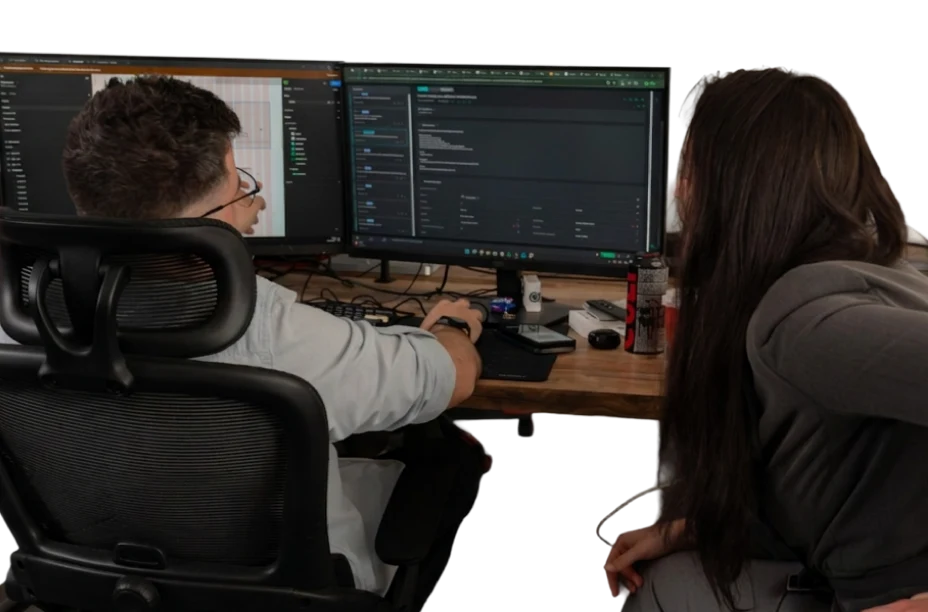
WD Market conducted a CRO audit to identify potential gaps in the customer experience and opportunities to improve conversion. The analysis validated the need for CRO but showed that growth could come from targeted customer-experience improvements rather than a major platform change.
-

What We Deliberately Did Not Recommend
WD Market did not recommend making broad changes simply because they represented eCommerce best practice. Improvements were tied to observed customer behaviour, qualitative evidence, funnel data, and measurable hypotheses.
-
Rebuild / Redesign / Spend Decision
The engagement demonstrated that a complete rebuild or increased advertising spend was not required to unlock growth. The priority was improving the effectiveness of the existing eCommerce experience and traffic.
Results We Delivered
-
Measured Results
After approximately 3 months of CRO work, add-to-cart increased 17%, customers reaching checkout increased 16%, and completed purchases increased 17.5%. Specific optimizations produced additional results: product-page visits +28%, conversion rate +6.2% following the product-discovery/filter improvement, upsell conversion +22%, and checkout completion rate +12%. Overall, the programme contributed to approximately 11% revenue growth without increasing the advertising budget.
-
Evidence and Metrics
The initial audit analyzed 45,919 sessions, with 3,232 add-to-carts, 2,536 customers reaching checkout, and 1,449 completed purchases. Baseline conversion rate was 3.16%, add-to-cart ratio was 7.04%, and checkout drop-off was 55.2%. Mobile represented 71.9% of traffic, making mobile UX a major priority.
-
What the Client Gained Beyond the Metric
Stories Flooring gained a structured CRO process connecting marketing, eCommerce, customer behaviour, analytics, and development. Instead of relying primarily on opinions or generic best practices, the company could continuously identify opportunities through data + behaviour + business context, implement hypotheses, measure results, and repeat the process.
- ~11% Revenue growth Without increasing the advertising budget.
- +17.5% Completed purchases After approximately 3 months of CRO work.
- +17% Add-to-cart After approximately 3 months of CRO work.