
- Shopify
- Figma
How Stoic Beauty Built an Evidence-Led Shopify CRO Process Through Data-Driven Improvements
Stoic Beauty had an established Shopify store but no dedicated technical eCommerce partner. The project objective was to improve the effectiveness of the existing Shopify store by identifying customer friction, implementing evidence-backed CRO improvements and creating a repeatable measure → learn → improve process without committing the business to unnecessary large-scale development.
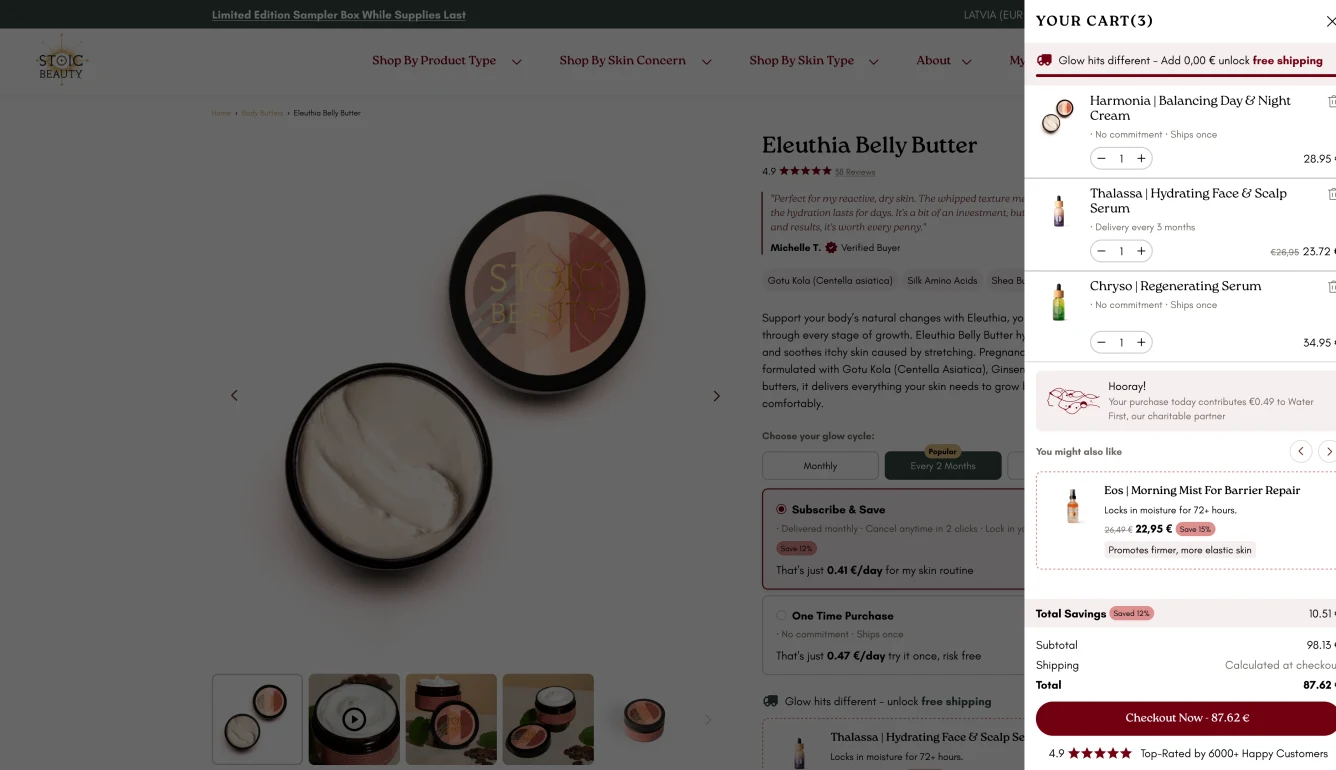
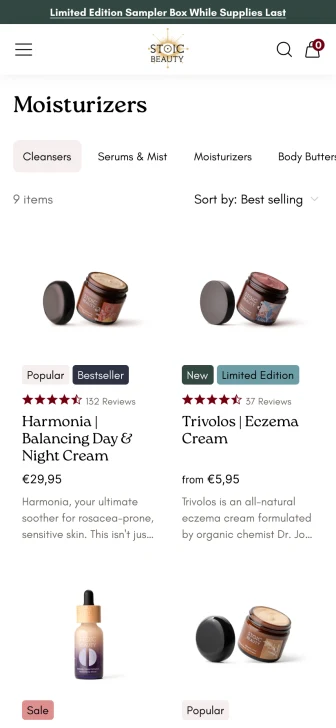

- Microsoft Clarity behavioral analysis
- Evidence-led CRO roadmap
- No unnecessary rebuild recommended
Stoic Beauty

Stoic Beauty had an established Shopify store but no dedicated technical eCommerce partner. The founder had historically managed much of the website herself, creating an opportunity to bring more specialized UX, CRO and technical expertise into the business.
- Canada — B2C
- stoic-beauty.ca
- Shopify
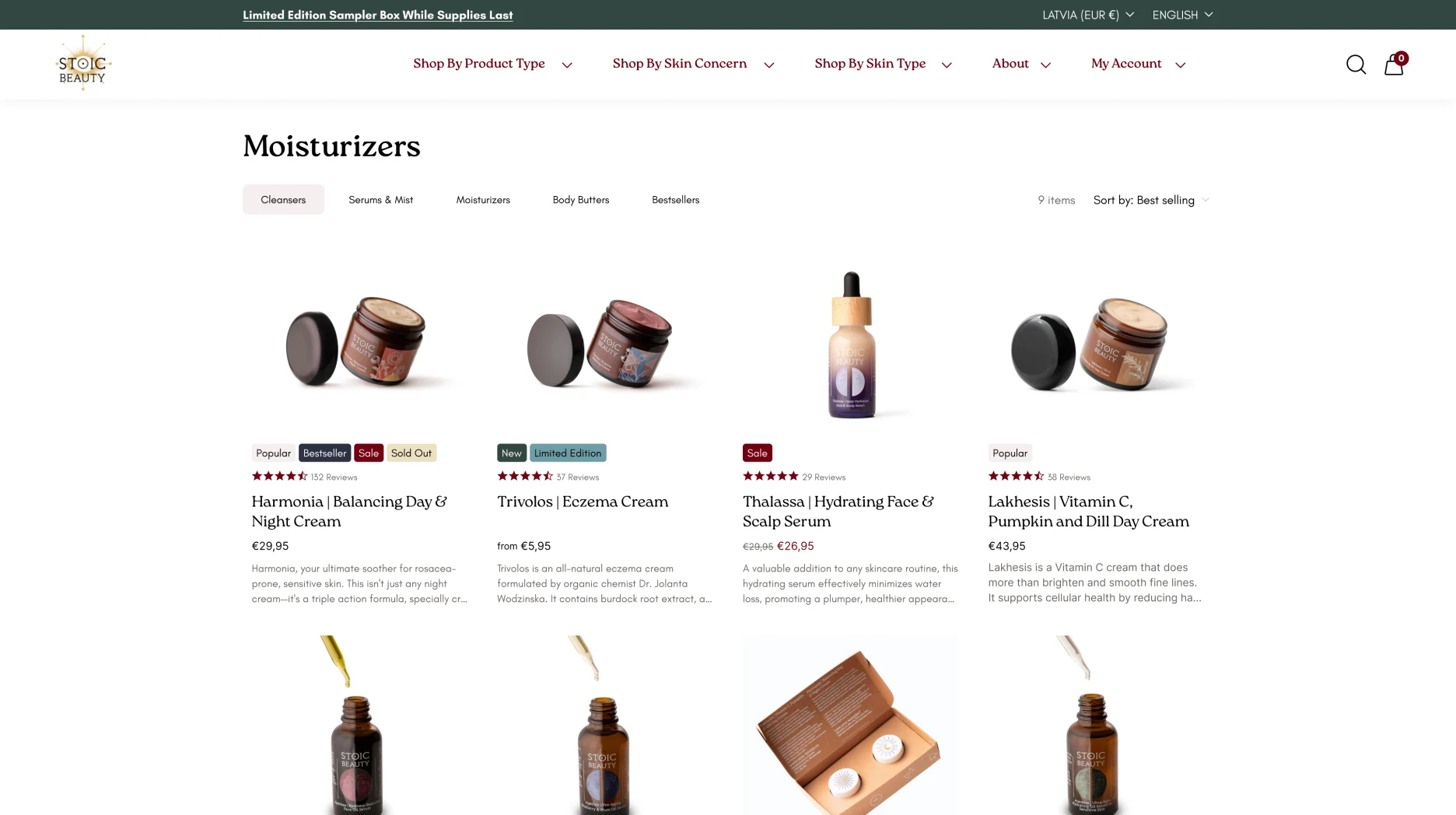
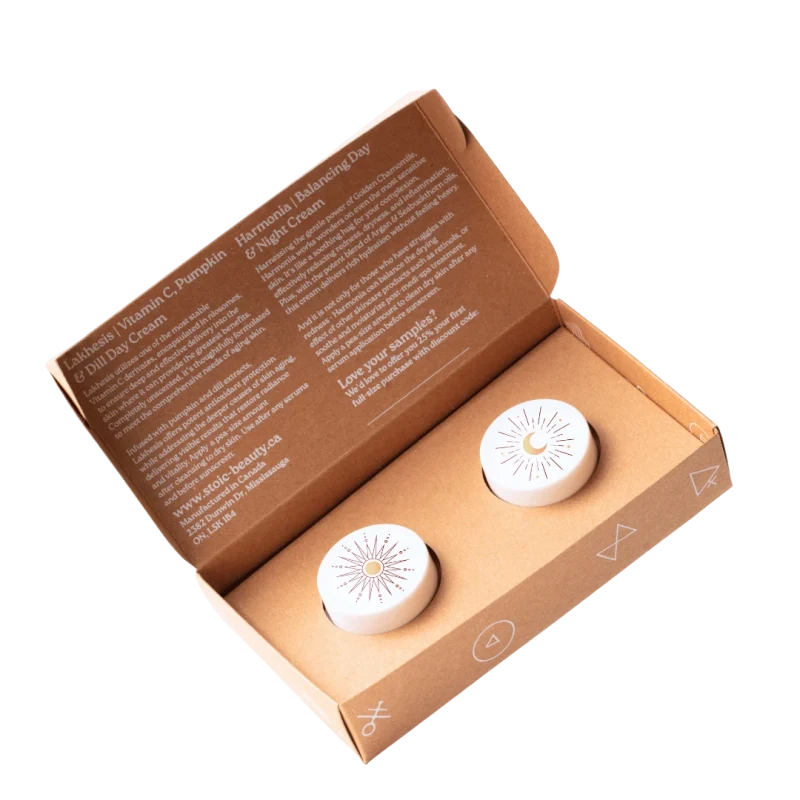
Services Provided:
- Usability Audit
- CRO
- UX/UI
- Shopify Development
The Challenge
The Starting Point
Stoic Beauty had an established Shopify store but no dedicated technical eCommerce partner. The founder had historically managed much of the website herself, creating an opportunity to bring more specialized UX, CRO and technical expertise into the business.
What the Client Believed Was Wrong
There wasn’t one clearly defined technical failure. The broader question was how the existing Shopify experience could perform better. WD Market’s initial audit identified an opportunity to move beyond assumptions and investigate how real customers were actually interacting with the store.
What Had Already Been Tried
The founder had largely managed and developed the Shopify store herself. Stoic Beauty did not previously have a dedicated technical eCommerce partner responsible for systematic usability analysis and CRO.
Why It Needed Attention
WD Market initially approached Stoic Beauty through cold outreach and offered a free eCommerce audit. The findings demonstrated enough potential to justify a deeper, paid usability analysis and subsequent implementation project.
Risk of Doing Nothing
Potential conversion friction would remain unresolved, while future website decisions would continue to rely more heavily on assumptions rather than observed customer behavior. For a smaller brand, inefficient investment in the wrong improvements could also consume budget without producing meaningful commercial impact.
Constraints That Shaped the Solution
Stoic Beauty is a relatively small eCommerce business, so investments need to be commercially justified. Rather than recommending multiple large initiatives simultaneously, improvements need to be prioritized according to their likely impact and implemented in manageable phases.
What Success Needed to Mean
Make the existing Shopify experience easier and more persuasive for customers while ensuring that development investment is directed toward problems supported by behavioral evidence. Longer term, success means measurable improvements in conversion and customer behavior rather than simply producing a more visually attractive website.
Our Approach
-
What the Evidence Showed
Behavioral analysis revealed usability and conversion opportunities that justified moving from a diagnostic audit into implementation. Instead of relying only on generic eCommerce best practices, recommendations were based on observed customer interaction with the actual store.
-
What We Prioritized First
Understanding real customer behavior. Microsoft Clarity analysis came before major design or development decisions so WD Market could identify where actual visitors experienced friction rather than redesigning based on assumptions.
-
How We Delivered It
Microsoft Clarity Data → Usability Audit → Findings Presentation → CRO Recommendations → UX/UI Design → Shopify Development → Implementation → Measurement. WD Market first demonstrated the problems with behavioral evidence, then designed and developed the agreed improvements.
-
How the Engagement Evolved
What started as a free eCommerce audit developed into a paid usability audit after deeper behavioral-analysis opportunities were identified. The audit then demonstrated sufficient evidence to justify a larger CRO design and Shopify implementation project. After implementation, the strategy shifted again—from changing the website to measuring the impact of those changes before doing more work.
The People Behind The Work
CRO / Usability Specialist, UX/UI Designer, Shopify Developer, Project Management, QA.
-

Einārs Melderis
Project Manager
Focus: Project Delivery · Communication · Coordination
-

Tomass Bērziņš
Head of E-Commerce & Co-Owner
Focus: Growth strategy · CRO · Customer Journey
-

Deins Grets
Head of UI/UX & CRO
Focus: UI/UX · Usability · Customer Journeys · CRO
-

Anush Avetisyan
QA Team Lead
Focus: QA · Payments · Integrations · Release Quality
-

Mark Jayvee Aivan Vargas
Developer
Focus: Shopify Development



 25+ Developers, Designers, CRO Specialists & others
Strategic Decisions
-

Recommendation
The engagement originated from WD Market’s own audit process rather than a predefined redesign request from the client. The important strategic decision was to recommend targeted, evidence-backed improvements rather than automatically proposing a complete rebuild.
-

What We Deliberately Did Not Recommend
We did not recommend rebuilding the entire Shopify store simply to generate a larger project. We also did not recommend immediately beginning another CRO phase after implementation. The current recommendation is to collect sufficient data first and determine whether additional changes are actually justified.
-

Rebuild / Redesign / Spend Decision
The existing Shopify platform could be improved through targeted UX, CRO and development work. After implementation, WD Market also deliberately chose not to push additional changes until enough evidence is available.
Results We Delivered
-
Evidence and Metrics
WD Market used Microsoft Clarity behavioral data to understand how visitors interacted with the existing Shopify store and identify usability and conversion opportunities.
-
What the Client Gained Beyond the Metric
Stoic Beauty gained access to specialized eCommerce expertise without committing to an oversized retainer or unnecessary rebuild. More importantly, website decisions can now follow a structured behavior → evidence → recommendation → implementation → measurement process instead of relying primarily on assumptions.