
- Shopify
- Figma
How Bigvita Improved Shopify Product Pages, Side Cart and Lifecycle Email Foundations
Bigvita had built its Shopify store internally, and unlike many WD Market clients, the existing website was already in good technical condition. The project objective was to increase the commercial performance of the existing Shopify store by reducing customer journey friction, strengthening product communication, improving cart behavior and developing retention mechanisms that generate additional value after the first visit or purchase.
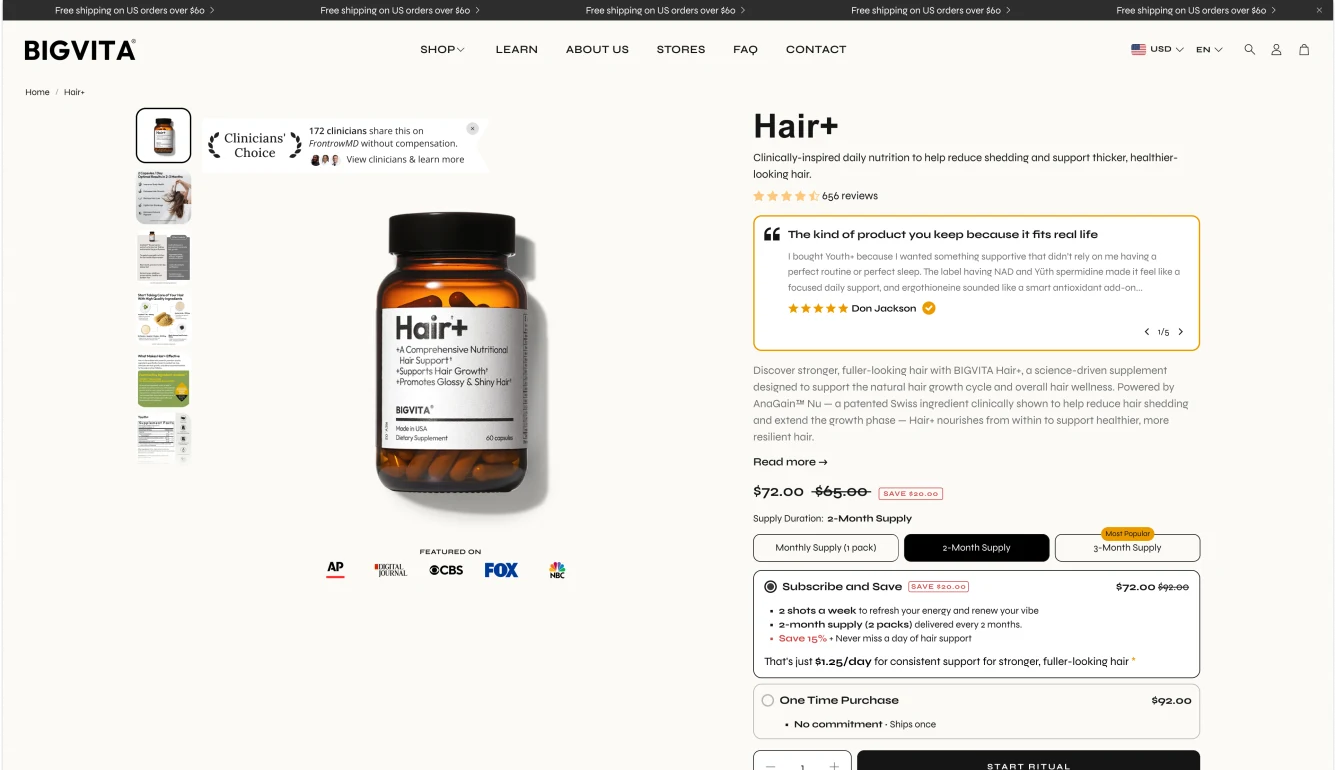
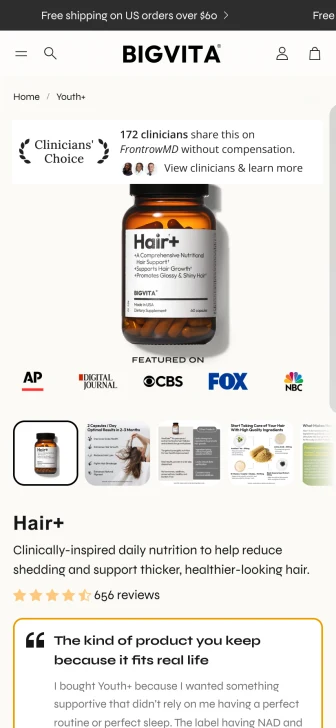

- Product-page CRO redesign delivered
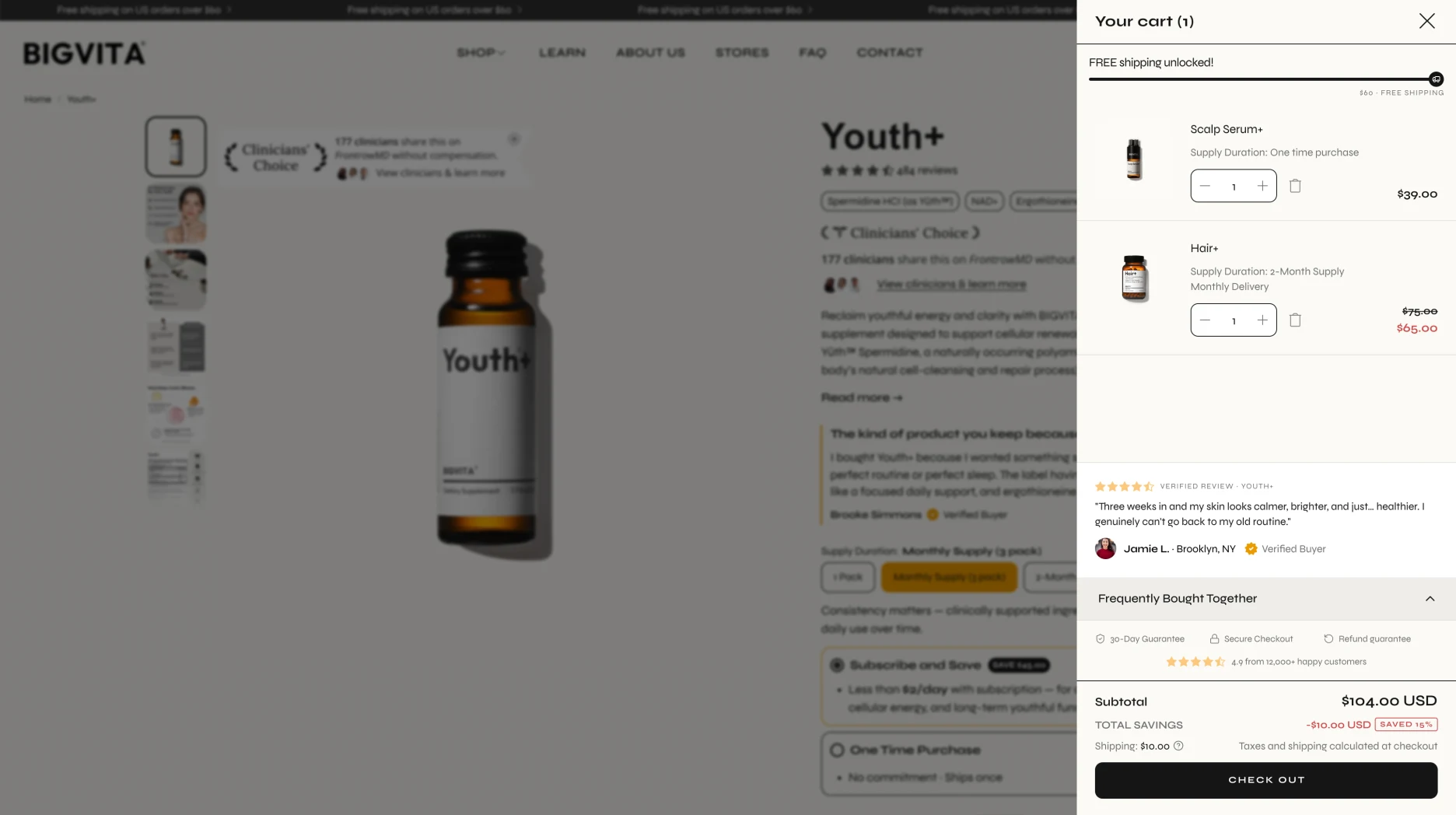
- Side-cart optimization delivered
- Klaviyo lifecycle automation foundation implemented
Bigvita

Bigvita had built its Shopify store internally, and unlike many WD Market clients, the existing website was already in good technical condition. The opportunity was therefore not a rebuild or migration but improving how effectively the existing experience converted visitors into customers.
- Canada / Primary market: USA
- bigvita.com
- Shopify + Klaviyo
Services Provided:
- eCommerce Usability Audit
- CRO
- Product Page
- Side Cart Optimization
- Shopify Development
- Email Automation
The Challenge
The Starting Point
Bigvita had built its Shopify store internally, and unlike many WD Market clients, the existing website was already in good technical condition. The opportunity was therefore not a rebuild or migration but improving how effectively the existing experience converted visitors into customers.
What the Client Believed Was Wrong
Bigvita wanted to improve eCommerce performance without unnecessarily rebuilding a technically solid Shopify store. Because supplements require significant education and trust before purchase, the challenge was understanding where customers experienced friction and where the existing journey could communicate product value more effectively.
What Had Already Been Tried
The Bigvita team had already designed and built its own Shopify store. The site incorporated benefit-driven messaging, education, customer testimonials, UGC, scientific positioning and trust signals, meaning WD Market was starting with an established eCommerce experience rather than a broken platform.
Why It Needed Attention
Bigvita had already created a strong technical and visual foundation. The next logical growth opportunity was improving conversion performance by understanding actual customer behavior rather than investing in another website build.
Risk of Doing Nothing
Bigvita could continue acquiring customers through an already functional store, but unidentified friction in high-intent areas of the journey could continue limiting conversion. The brand would also leave retention opportunities underdeveloped without abandoned-cart and post-purchase lifecycle automation.
Constraints That Shaped the Solution
Bigvita sells premium wellness products primarily to US consumers. Customers need sufficient education, credibility, social proof and understanding of product benefits before purchasing, making the quality of product communication particularly important.
What Success Needed to Mean
Improve the existing customer journey without unnecessary redevelopment, make high-intent shopping interactions more effective and establish additional lifecycle touchpoints capable of recovering and retaining customers.
Our Approach
-
What the Evidence Showed
The technical platform itself was not the bottleneck. Customer-behavior analysis showed opportunities within critical parts of the purchasing journey, particularly where customers evaluate products and transition toward checkout. This shifted the focus toward targeted CRO rather than broad redevelopment.
-
What We Prioritized First
Customer behavior analysis first. Because the website was technically healthy, the team needed evidence showing where customers actually experienced friction before recommending development. Microsoft Clarity and the usability audit provided that evidence.
-
How We Delivered It
WD Market started with a paid eCommerce Usability Audit, combining expert analysis with Microsoft Clarity behavioral data. Based on the findings, WD Market proposed a focused CRO mini-project covering the product page and side cart. Bigvita approved it, and WD Market designed and developed both improvements directly in Shopify.
-
How the Engagement Evolved
The engagement expanded naturally as new opportunities were identified. The original usability audit revealed product-page and side-cart opportunities, which became a dedicated CRO design and development project. After that, WD Market identified retention as the next opportunity, leading Bigvita to purchase a Klaviyo email automation package.
The People Behind The Work
CRO / Usability Specialist, UX/UI Designer, Shopify Developer, Project / Account Management, Email Marketing Specialists.
-

Jānis Strautiņš
Support Team Lead
Focus: Support · Troubleshooting · Coordination
-

Tomass Bērziņš
Head of E-Commerce & Co-Owner
Focus: Growth strategy · CRO · Customer Journey
-

Deins Grets
Head of UI/UX & CRO
Focus: UI/UX · Usability · Customer Journeys · CRO
-

Anush Avetisyan
QA Team Lead
Focus: QA · Payments · Integrations · Release Quality
-

Mark Jayvee Aivan Vargas
Developer
Focus: Shopify Development



 25+ Developers, Designers, CRO Specialists & others
Strategic Decisions
-
Recommendation
The strategic decision was not to rebuild or redesign the entire Shopify store. The existing technical foundation was already strong, so WD Market focused investment on specific customer-journey opportunities supported by behavioral evidence.
-

What We Deliberately Did Not Recommend
We did not recommend a new Shopify website simply to create a larger development project. The existing store was technically sound. Development was limited to areas where the usability audit identified a clear opportunity for improvement.
-

Rebuild / Redesign / Spend Decision
Effectively, we avoided an unnecessary rebuild. Rather than introducing major structural changes, WD Market focused on high-impact CRO improvements within the existing platform.
Results We Delivered
-
Measured Results
Product Page & Side Cart CRO redesign and Shopify development delivered, followed by implementation of the initial Klaviyo lifecycle automation foundation.
-
Evidence and Metrics
WD Market analyzed real customer behavior through Microsoft Clarity as part of a paid eCommerce Usability Audit. The analysis identified two particularly important optimization opportunities: the product page and side cart/cart experience.
-
What the Client Gained Beyond the Metric
Bigvita gained a repeatable growth process rather than isolated development work: analyze behavior → identify bottleneck → design improvement → develop → measure → identify the next opportunity. The relationship has already expanded from Usability Audit → CRO → Shopify Development → Email Marketing Automation.