
“In 2026, the cost of being generic is higher than the cost of being wrong.” – Seth Godin.
This principle has become the ultimate law of E-commerce.
Sending the same message to your entire audience is an expensive mistake that results in wasted ad spend and low engagement – especially when relevance and timing outweigh frequency when it comes to driving action, according to Klaviyo.
While you could once rely on simple demographics like age or a basic “VIP” tag, that approach now leads to invisible margins and rising acquisition costs.
Growth today depends on how deeply you understand the few people you already have. Every click, hover, and pause on your site is a data signal. To scale without burning through your budget, you must move from static lists to a smart, predictive segmentation engine.
What is AI Customer Segmentation, Really?
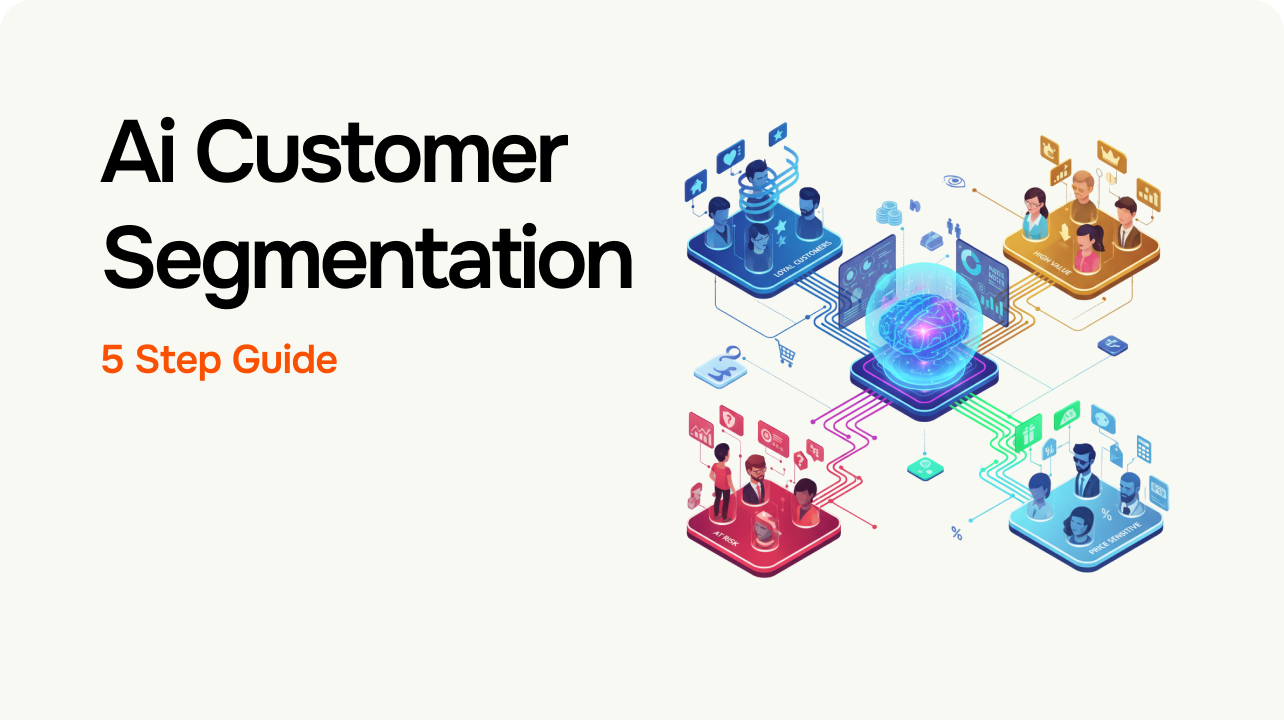
At its core, AI Customer Segmentation is the process of using machine learning algorithms to identify complex patterns in customer data that a human eye (or a standard spreadsheet) would never see.
In the old world, segmentation was reactive.
You looked at what happened last month and grouped people accordingly. In 2026, AI segmentation is predictive. It’s not just about who a customer is today, but who they are becoming.
It’s a move from “what they bought” to “why they bought it and what they will need next Tuesday.”
Instead of manual rules, like “If user spends $100, move to VIP”, AI clusters users based on thousands of variables:
- The velocity of their clicks. How fast are they moving toward a decision?
- The sentiment of their reviews. Are they happy with the product but annoyed by the shipping?
- Predicted churn date. When will they likely stop buying if you don’t intervene?
- Time-to-Conversion. Do they buy instantly or need seven touchpoints?
Types Of Customer Segments
Before we get into the “how-to,” we need to understand the types of segments that actually drive profit in the current landscape. We’ve moved beyond the basic “new vs. returning” split.
1. Intent-based segments
These are “liquid” segments. A user might be in this group for only 48 hours.
AI analyzes real-time signals – like a user comparing three different colors of the same item or spending five minutes on a shipping policy page. This indicates high intent but high friction.
2. Predictive lifetime value (pCLV) groups
In the past, you had to wait months to know if a customer was actually “high value.” Today, AI can tell you almost instantly. According to Think With Google, predictive models can now estimate a customer’s long-term value much earlier than before – often from their first purchase and early behavioral signals.
The system looks at “early signals,” like what they bought first and how long they spent on the site. This allows you to instantly separate your audience into two groups:
- Future whales: These are the big spenders. You should invest your ad budget here and give them your best service because they drive your long-term profit.
- One-time buyers: These people won’t return. By identifying them early, you can stop wasting money on ads trying to chase them back.
Here’s an example of predictive CLV analytics used to identify high-value customers early.
By knowing who is who on Day 1, you spend your marketing dollars where they actually grow your business.
3. Sentiment-driven clusters
By using Natural Language Processing (NLP), AI scans support tickets and reviews to understand the context and sentiment behind each comment.
It creates a segment of “Frustrated Loyals.” These are people who love your products but are unhappy with slow shipping or a difficult return process.
Instead of sending them a generic 10% discount, which doesn’t solve their real problem, you send them a “priority shipping” upgrade for their next order. Addressing their specific pain point is way more effective than a standard sale.
4. Churn-risk personas
In 2026, waiting for a customer to stop buying is too late – by then, they’ve already moved on.
AI identifies “micro-signals of boredom” before the breakup happens. It looks for small changes in behavior, like a user opening fewer emails or taking just a few days longer than usual to reorder – as time between orders increases, the probability of churn also rises.
When the AI spots these signs, it automatically moves the customer into a “Re-engagement” flow. Instead of a generic “We miss you” message, you send a personalized nudge that reminds them why they liked your brand in the first place.
The goal is to save the relationship while they are still paying attention, not after they’ve cleared their browser cookies and left for a competitor.
The 5-Step Guide to Implementing AI Segmentation
Step 1: Shift from Demographics to Behavioral Signals
The biggest threat to your growth is the assumption that people in the same age bracket shop the same way.
In 2026, behavioral signals are the only truth. A 60-year-old grandmother and a 20-year-old student might both be “High-Performance Swimmers” based on their browsing habits.
Stop asking your data “Who is this person?” and start asking “What is their current problem?” AI allows you to track micro-moments:
- Repeated visits to the sizing chart (Size Anxiety).
- Multiple scrolls through user-generated reviews (Social Proof Requirement).
- High-frequency visits to “Back in Stock” pages (Unmet Demand).
When you segment based on these behaviors, your marketing stops being an intrusion and starts being a solution. Success belongs to the brands that recognize intent over identity.
Step 2: Build a Single Source of Truth
AI is only as good as the data you give it.
Most e-commerce stores fail here because their data is “siloed.” This means their email platform, warehouse software, and ad accounts are completely disconnected – they aren’t sharing information with each other.
To fix this, you need to implement a Customer Data Platform (CDP).
A CDP acts as a central database, collecting every bit of customer data from every touchpoint – Shopify, Klaviyo, Meta Ads, and your helpdesk – to create a single, complete profile.
Instead of your team manually moving lists around, the technology handles the logic automatically. If your business has outgrown basic templates, you need a custom setup that keeps your data moving freely and updates in real-time.
Step 3: Train Your Predictive Models
Once your data is connected, you can move from “descriptive” to “predictive.”
Forget about hiring data experts. You just need the right e-commerce strategy and tools that plug directly into your Shopify or WooCommerce store.
Start by identifying your “Golden Path”:
- Identify the specific sequence of actions taken by your top 10% of customers.
- Find your “Success Signal” (e.g., customers who buy a second time within 14 days stay for 2 years).
- Train the AI to flag new users who mimic this behavior.
The goal is to identify your high-value segments early so you can over-invest in them while they are still in the “consideration” phase.
Step 4: Move to Dynamic, “Liquid” Flows
A static email list is a liability. In the current market, your segments must be “liquid,” meaning customers flow in and out of them automatically based on their last action.
Thisemail marketing strategy ensures you are never “shouting” at a customer who has tuned you out. It keeps your engagement rates high and your sender reputation clean.
Real-time blocks and “Live Inventory” modules in your messaging ensure that when a customer does decide to click, the offer is still relevant.
Step 5: Feed the “Signal” to Your Ad Platforms
This is where e-commerce scaling actually happens. In 2026, the way to find new customers profitably is to feed your AI segments back into platforms like Meta and Google as “Signals.”
- Export “Predicted High-Value” lists. Use these for seed audiences.
- Negative segmentation. Automatically remove customers with open support tickets from your “Buy Now” ad campaigns.
- Creative syncing. Show specific ads to users in specific “Liquid” segments (e.g., show “Durability” ads to those who read the warranty page).
Final Thoughts
It’s easy to get lost in the tech, but remember: the goal of AI is to get you closer to the human on the other side of the screen.
Think about it: when you know a customer’s 30-day supply is running low and you send them a re-order link on day 28, that isn’t just “automation.” You’re solving their problem before they even have to ask.
That is how you build a brand people actually love.In the old world of e-commerce, scaling meant getting bigger and louder. In 2026, scaling means getting closer to your customer.
The winner isn’t the one with the biggest ad budget. It is the one who knows their customer’s biggest daily struggle and solves it before they even ask.
The brand that listens earns a permanent seat in the customer’s life.
Understanding the “why” behind a purchase creates a bond no algorithm can break. This turns your store into a partner, making you the default choice by offering the path of least resistance.
Is your marketing still shouting at everyone?
If you’re ready to stop wasting ad spend on one-time buyers and start identifying your “Future Whales” on Day 1, let’s talk. Contact us.